EN
EN



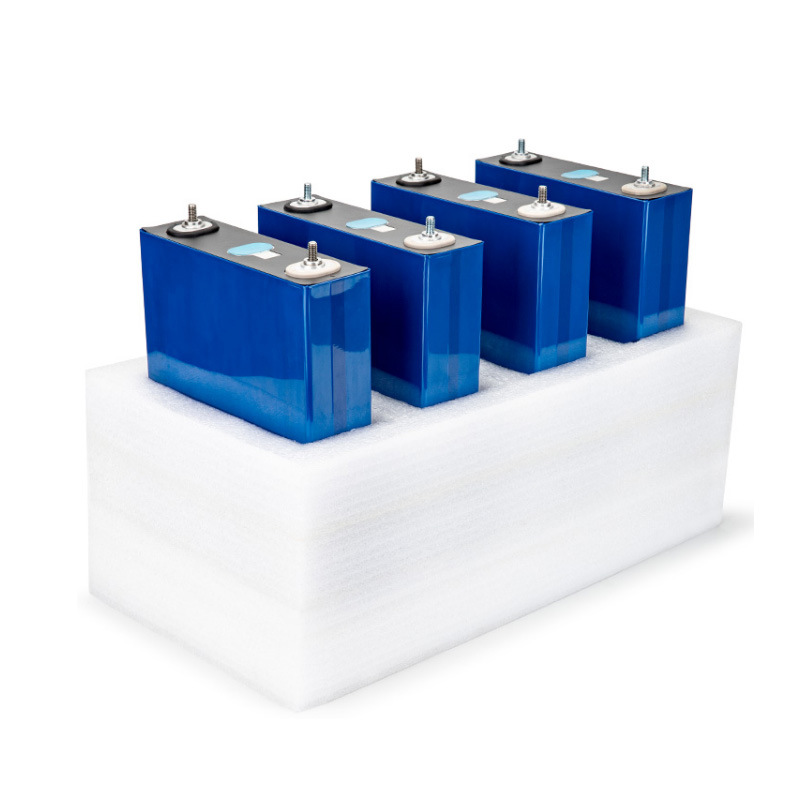
The renewable energy revolution is fundamentally reshaping how the world generates, stores, and distributes power. At the heart of this transformation lies a single, critical technology: the lithium battery. As solar panels and wind turbines proliferate across landscapes globally, the ability to capture, store, and release energy on demand has become essential. Without advanced lithium battery solutions, renewable sources remain inconsistent and unreliable. A lithium battery system converts intermittent renewable generation into stable, dispatchable power, bridging the gap between peak sunlight hours and evening demand. The lithium battery has emerged as the industry standard precisely because it delivers superior energy density, longer cycle life, and faster response times compared to alternative storage technologies.
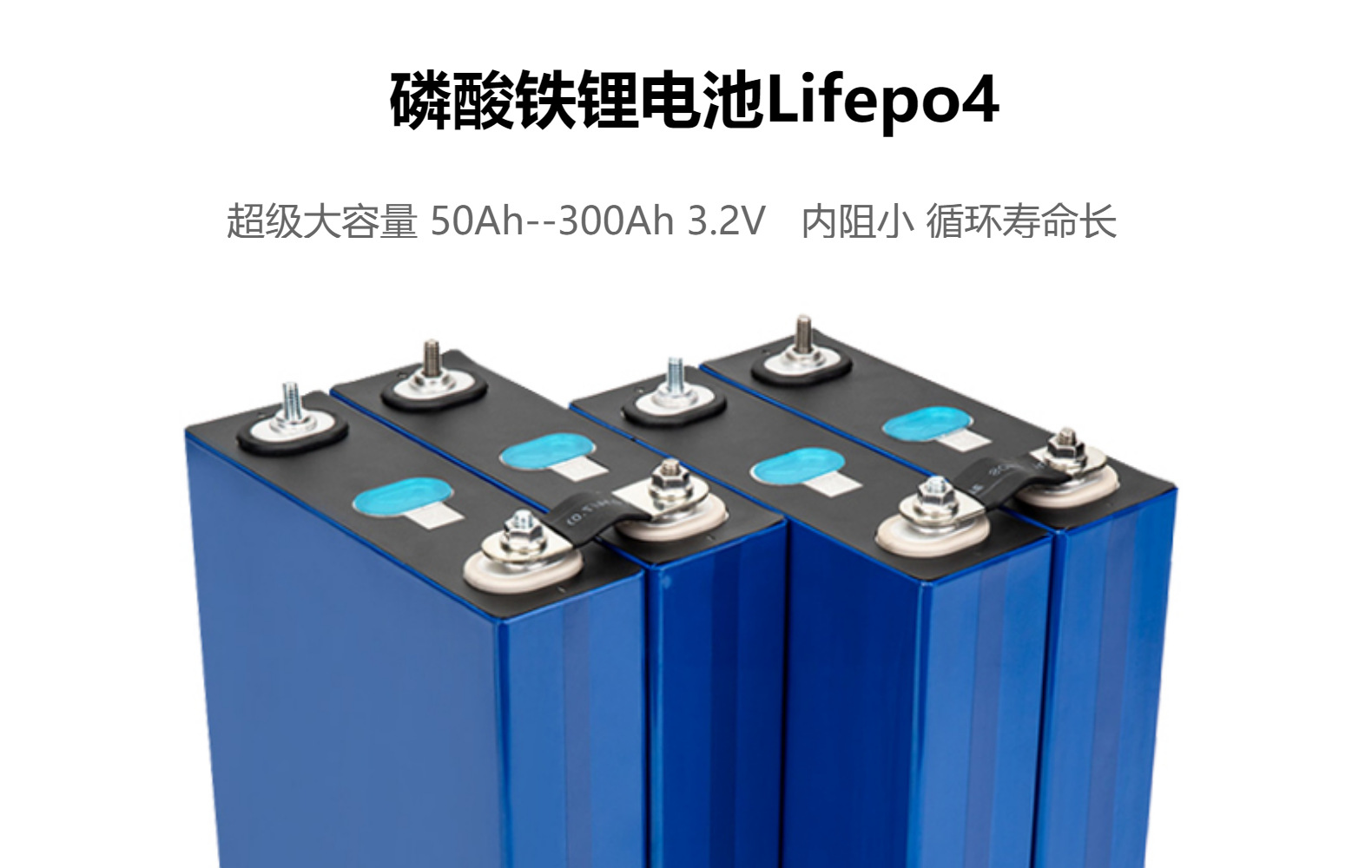
Modern industrial and commercial operations cannot ignore the strategic value of lithium battery technology. Whether deployed in grid-scale installations, distributed solar systems, or backup power applications, a lithium battery provides the performance characteristics that renewable energy projects demand. The economics of renewable energy hinge on cost-effective storage, and lithium battery innovations continue to drive down capital expenditure while extending operational lifespan. Understanding how lithium battery systems function, their application scenarios, and their role in decentralized energy networks is now essential knowledge for energy professionals, facility managers, and investors.
The Core Function of Lithium Battery Systems in Renewable Integration
Energy Storage and Load Shifting with Lithium Battery Technology
A lithium battery functions as a temporal energy bridge, capturing excess generation during peak production hours and discharging during periods of high demand or low renewable output. Solar installations generate maximum power at midday, yet commercial facilities often consume peak energy in the morning and evening. A lithium battery system absorbs the midday surplus and releases it when needed, effectively decoupling generation timing from consumption timing. This load-shifting capability reduces reliance on grid backup power and minimizes demand charges that can represent 30 to 50 percent of commercial electricity bills. The lithium battery architecture optimizes round-trip efficiency, typically achieving 90 to 95 percent efficiency in charge and discharge cycles, preserving valuable renewable energy rather than dissipating it.
Grid Stabilization and Demand Response
Utility-scale lithium battery deployments now provide essential grid services including frequency regulation, voltage support, and rapid frequency response. When renewable generation fluctuates due to cloud cover or wind variations, a lithium battery can inject or absorb power within milliseconds, stabilizing grid frequency within the required tolerance bands. This synthetic inertia capability addresses a fundamental challenge of high-penetration renewable grids: maintaining stability as synchronous generators retire. Lithium battery systems enable utilities to defer transmission and distribution upgrades by decades, offering a cost-effective alternative to traditional infrastructure investment. The fast discharge capability of a lithium battery makes it uniquely suited for this role, outperforming slower-response storage technologies in grid support applications.
Lithium Battery Chemistry and Performance Advantages
Lithium Iron Phosphate and Long-Duration Performance
Lithium iron phosphate chemistry has become the preferred choice for stationary energy storage because it delivers an exceptional combination of safety, cycle life, and cost-effectiveness. A lithium battery based on lithium iron phosphate chemistry can sustain 8,000 to 10,000 full charge cycles, translating to 10 to 15 years of daily operation before capacity degradation becomes significant. This extended cycle life justifies the capital investment in a lithium battery system over typical 25-year renewable project lifespans. Lithium iron phosphate chemistry also exhibits superior thermal stability, reducing cooling requirements and operating costs compared to other lithium battery formulations. Industrial facilities that require predictable performance and minimal maintenance favor lithium battery systems built on lithium iron phosphate, as this chemistry demonstrates consistent state-of-health tracking and simplified battery management protocols.
Energy Density and Footprint Optimization
The gravimetric and volumetric energy density of a lithium battery far exceeds lead-acid, flow batteries, and mechanical storage alternatives. A lithium battery delivers 150 to 250 watt-hours per kilogram, allowing substantial energy storage capacity in remarkably compact physical footprints. For commercial rooftops, indoor installations, and space-constrained industrial facilities, this energy density advantage is transformative. A lithium battery system can be stacked modularly, scaling from 5 kilowatt-hours to multi-megawatt-hour configurations without requiring dedicated buildings or extensive land acquisition. This scalability and compact form factor make a lithium battery the practical solution for distributed renewable deployments, enabling individual facilities to achieve energy independence without infrastructure constraints that would render other storage technologies economically unviable.
Real-World Industrial Applications of Lithium Battery Systems
Off-Grid and Microgrid Deployment
Remote facilities, island communities, and industrial operations disconnected from central grids increasingly depend on hybrid renewable plus lithium battery systems. A lithium battery paired with solar and wind generation creates a self-contained energy ecosystem, eliminating expensive diesel fuel logistics and generator maintenance. Lithium battery systems in off-grid applications must handle extended autonomy periods, requiring careful sizing and management. The predictable discharge profile and state-of-charge accuracy of a lithium battery enable sophisticated energy management controllers to optimize load shedding, generator start-stop logic, and renewable prioritization. Industrial mines, agricultural processing facilities, and telecommunications infrastructure in remote regions have adopted lithium battery solutions to achieve cost parity with diesel while gaining energy independence and operational resilience.
Commercial and Residential Behind-the-Meter Storage
Behind-the-meter lithium battery systems allow commercial and residential customers to maximize solar self-consumption, reduce demand charges, and achieve energy arbitrage against time-of-use electricity pricing. A lithium battery charged during low-cost off-peak hours and discharged during peak pricing periods can deliver payback periods of five to eight years in markets with favorable rate structures. Lithium battery systems also provide backup power during grid outages, a resilience value that customers increasingly demand following climate-driven weather events. The modular architecture of modern lithium battery products enables incremental expansion, allowing customers to start with modest storage capacity and scale according to evolving energy needs and economic conditions. Manufacturers and hospitality operations leverage lithium battery systems to flatten consumption profiles, reduce peak demand, and achieve sustainability commitments while maintaining operational continuity.
The Economic and Environmental Impact of Lithium Battery Adoption
Declining Cost Curves and Market Acceleration
Lithium battery cost reductions of 85 percent over the past decade have catalyzed renewable energy deployment globally. A lithium battery that cost $1,200 per kilowatt-hour in 2010 now costs under $130 per kilowatt-hour, approaching economic parity with fossil fuel generation in an expanding number of markets. This cost trajectory reflects manufacturing scale, process optimization, and competitive intensity among lithium battery suppliers. The levelized cost of energy from solar plus lithium battery systems has fallen below natural gas generation in favorable geographies, fundamentally altering investment economics. Continued cost reductions, driven by technological refinement and supply chain maturation, promise to extend lithium battery economic viability to additional market segments and geographic regions within the coming five years.
Environmental Benefits and Circular Economy Development
The environmental profile of a lithium battery improves dramatically over its operational lifetime through avoided fossil fuel consumption. A lithium battery that stores renewable energy prevents tens of thousands of tons of carbon dioxide emissions compared to equivalent diesel or natural gas generation. At end-of-life, lithium battery recycling recovers valuable materials including lithium, cobalt, nickel, and copper, reducing mining pressure and environmental disturbance. Emerging circular economy models for lithium battery systems are establishing closed-loop material flows, further enhancing the sustainability credentials of battery-based storage. Second-life applications for retired lithium battery modules in stationary storage extend useful service periods and maximize resource utilization before recycling. The environmental advantage of deploying a lithium battery within renewable energy systems compounds over decades, making lithium battery technology a cornerstone of decarbonization strategies across industrial, commercial, and utility sectors.
FAQ
How long does a lithium battery typically last in renewable energy applications?
A lithium battery in renewable energy storage typically lasts 10 to 15 years of daily cycling, with lithium iron phosphate chemistry sustaining 8,000 to 10,000 full charge cycles before significant capacity fade occurs. Many lithium battery systems retain 80 percent or more of initial capacity at the 10-year mark, far exceeding lead-acid alternatives. Actual lifespan depends on operating temperature, depth-of-discharge patterns, and charge rate management protocols implemented by the battery management system controlling the lithium battery.
What is the efficiency of a lithium battery in storing and retrieving renewable energy?
A lithium battery achieves 90 to 95 percent round-trip efficiency, meaning that approximately 90 to 95 cents of every dollar of energy stored in the lithium battery is available for discharge. This efficiency advantage over alternative storage technologies like flow batteries or compressed air directly translates to reduced solar or wind generation capacity required to meet demand through storage. The efficiency of a lithium battery system also benefits from low self-discharge rates, typically 1 to 2 percent monthly, ensuring that stored renewable energy remains available even during extended periods of low renewable generation.
Can a lithium battery system be scaled for both residential and utility-scale applications?
Yes, lithium battery systems scale seamlessly from residential capacities of 5 to 15 kilowatt-hours through multi-megawatt-hour utility installations serving entire communities or grid regions. A lithium battery's modular architecture enables incremental deployment, with individual modules stacked to achieve required capacity and voltage specifications. This scalability makes a lithium battery the preferred storage solution across residential rooftops, commercial facilities, industrial microgrids, and utility transmission support applications, adapting to diverse energy management requirements without fundamental redesign.